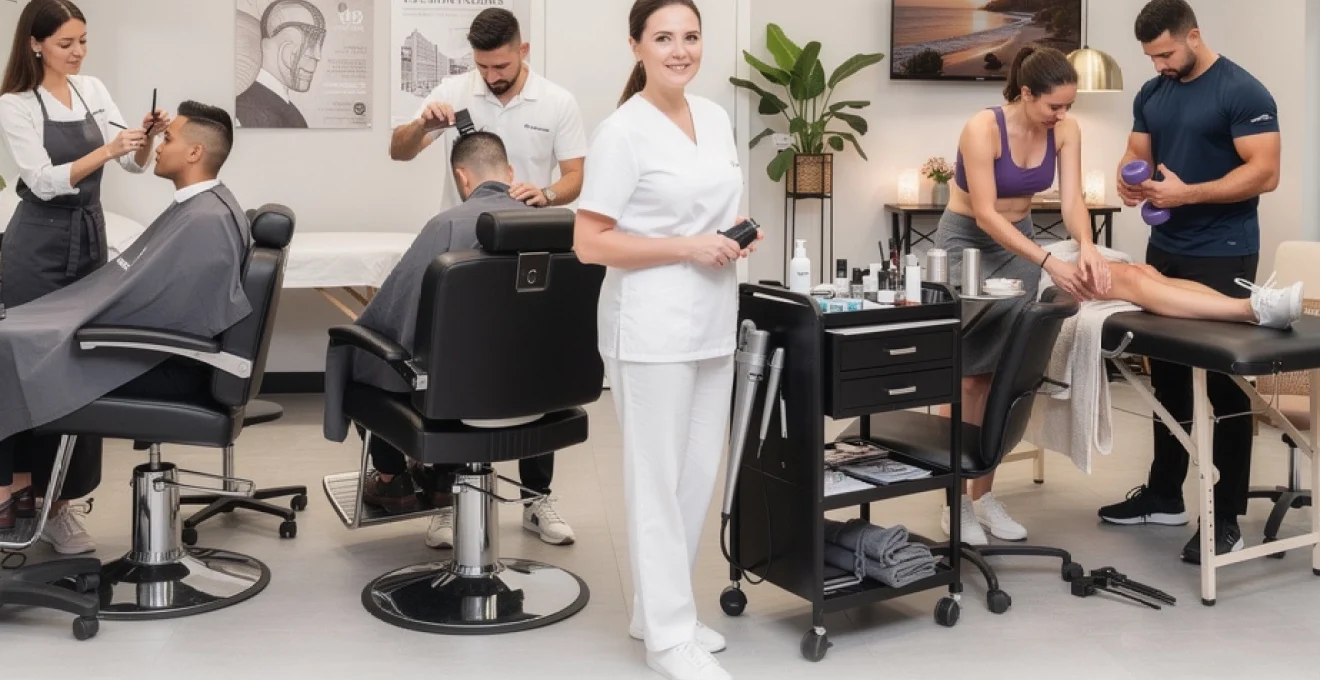
The personal services sector has emerged as one of the most resilient and promising career pathways in today’s rapidly evolving employment landscape. Encompassing everything from hairdressing and beauty therapy to massage, fitness training, and specialist wellness treatments, this diverse industry offers professionals a unique combination of job security, entrepreneurial flexibility, and genuine personal fulfilment. With over 60% of the UK workforce engaged in customer-facing or service-oriented roles, the personal care and wellness industries represent a significant economic pillar that continues to expand despite broader economic uncertainties. For individuals seeking careers that blend creativity, interpersonal connection, and tangible skills development, personal services present opportunities that extend far beyond traditional employment models.
The sector’s appeal lies not only in its stability but also in the remarkably accessible entry routes it provides. Unlike many professions requiring extensive academic credentials, personal services careers can be launched through practical vocational qualifications, apprenticeships, and focused training programmes. This accessibility, combined with the sector’s inherent resistance to automation and outsourcing, positions personal services as an intelligent career choice for school leavers, career changers, and aspiring entrepreneurs alike. The growing emphasis on self-care, wellness, and personal presentation across all demographic groups has created sustained demand that shows no signs of diminishing.
Recession-resistant demand patterns in personal care and wellness industries
Personal services demonstrate remarkable resilience during economic downturns, a characteristic that distinguishes them from many other sectors. While luxury purchases and discretionary spending often contract during recessions, essential personal care services—haircuts, basic beauty treatments, and wellness therapies—maintain consistent demand. This phenomenon, sometimes referred to as the “lipstick effect,” reflects consumers’ tendency to prioritise affordable personal indulgences even when larger expenditures are curtailed. During the 2008 financial crisis, for instance, the beauty and personal care sector experienced significantly less contraction than retail, hospitality, and manufacturing industries.
The psychological and social importance of personal appearance and wellbeing creates a baseline demand that persists regardless of broader economic conditions. People continue to require haircuts for professional presentation, seek massage therapy for stress-related ailments, and maintain grooming routines as part of their daily lives. This consistent need translates into stable employment for practitioners and sustainable business models for service providers. Additionally, as economic pressures mount, some consumers shift from luxury spa experiences to more affordable salon treatments, effectively redistributing spending within the sector rather than eliminating it entirely.
The wellness economy, valued at over £4.2 trillion globally, has demonstrated compound annual growth rates exceeding traditional economic expansion. Mental health awareness, preventative healthcare approaches, and holistic wellness philosophies have elevated personal services from optional luxuries to recognised components of comprehensive health maintenance. Massage therapists, for example, increasingly work alongside physiotherapists and sports medicine professionals, whilst beauty therapists incorporate skin health education into their practice. This professionalisation and integration with broader healthcare systems further insulates the sector from economic volatility.
Demographics also contribute to recession resistance. An ageing population requires ongoing personal care services, from chiropody to age-appropriate beauty treatments. Simultaneously, younger generations demonstrate heightened awareness of self-care practices and willingness to invest in personal wellness. This multi-generational demand creates diversified revenue streams that buffer individual practitioners and businesses against the preferences of any single demographic cohort. The sector’s stability makes it an attractive option for individuals seeking long-term career security without the vulnerability that characterises cyclical industries.
Low barrier to entry through vocational qualifications and apprenticeships
One of the most compelling aspects of personal services careers is the accessibility of entry-level qualifications. Unlike professions requiring three or four-year university degrees, many personal services roles can be accessed through vocational training programmes lasting from several months to two years. This dramatically reduces both the time investment and financial burden associated with career preparation, allowing individuals to enter the workforce more quickly and with substantially less debt. The emphasis on practical, hands-on learning also suits individuals who thrive in applied educational environments rather than purely academic settings.
Vocational qualifications provide structured pathways that combine theoretical knowledge with extensive practical experience. Trainees develop technical competencies whilst simultaneously building the customer service skills, communication abilities, and professional demeanour essential for success in client-facing roles. Many programmes incorporate work placements or apprenticeship components, enabling learners to earn whilst they develop their expertise. This earn-as-you-learn
model not only makes training more affordable but also embeds learners in real working environments from day one. As a result, new entrants to the personal services sector quickly build confidence, develop professional habits, and begin to establish a local client base even before they are fully qualified.
NVQ level 2 and level 3 pathways in hairdressing and beauty therapy
For many aspiring professionals, NVQ Level 2 serves as the primary gateway into hairdressing and beauty therapy careers. This qualification focuses on core skills such as shampooing, basic cutting, blow-drying, manicure and pedicure techniques, waxing, and client consultation. Because assessments are based on real-world tasks rather than written exams alone, you can demonstrate competence in a practical, hands-on way that mirrors the realities of salon work.
Progressing to NVQ Level 3 allows practitioners to move beyond foundational skills into advanced technical and creative work. At this stage, learners typically cover complex colouring, advanced cutting, creative styling, electrical facial treatments, and body massage, along with small-business awareness and health and safety responsibilities. This step up in training often correlates with higher earning potential and access to supervisory or senior stylist roles, particularly in larger salons and spas.
These NVQ pathways are designed with career progression in mind. Many colleges and private training providers offer flexible timetables, including evening or part-time study options, enabling you to combine training with existing work or caring responsibilities. Crucially, NVQ Level 2 and Level 3 qualifications are widely recognised by employers and insurers across the UK, providing a portable credential that supports mobility and long-term career development within the personal care industry.
City & guilds certification routes for barbering and aesthetic treatments
City & Guilds remains one of the most respected awarding bodies for vocational training, particularly in barbering and aesthetic treatments. Their barbering qualifications, available from Level 2 upwards, focus on clipper work, scissor-over-comb techniques, beard design, and client consultation skills specific to male grooming. With the men’s grooming market growing rapidly, accredited barbering training provides a direct route into a high-demand niche of the personal services sector.
In aesthetics, City & Guilds offers qualifications that support progression into services such as advanced skin care, facial electrotherapy, and body electrical treatments. These certifications provide the underpinning knowledge in anatomy, physiology, and hygiene that is essential for safe practice in more technical areas of beauty therapy. Because many insurance providers insist on recognised qualifications for higher-risk treatments, City & Guilds credentials can be a prerequisite for offering specialist services.
Another advantage of City & Guilds certification routes is their close alignment with employer expectations. Syllabi are developed in consultation with industry practitioners, ensuring that the skills you learn are directly relevant to contemporary salon and clinic environments. For individuals considering self-employment or clinic-based work, these qualifications create a solid foundation from which to branch into specialist courses or manufacturer-led training in devices and products.
VTCT diplomas for complementary therapies and holistic practices
VTCT diplomas play a central role in training professionals in complementary therapies and holistic practices such as aromatherapy, reflexology, Indian head massage, and holistic body massage. These qualifications are particularly attractive to those who see personal services as a route into wellness-focused or therapeutic work, whether in private practice, spa environments, or integrated health settings. VTCT programmes emphasise both technical massage skills and a broader understanding of client care and wellbeing.
At Levels 3 and 4, VTCT diplomas usually include substantial content on anatomy and physiology, client assessment, and treatment planning. This knowledge base equips therapists to work safely with a wide range of clients, including those with chronic conditions or specific health concerns, in collaboration with healthcare professionals where appropriate. As public interest in preventative health and holistic wellness grows, these qualifications position therapists to meet a sophisticated and health-aware client base.
VTCT’s strong focus on professional standards and ethics also supports long-term career prospects. Many spas, wellness centres, and health clubs view VTCT diplomas as a benchmark of quality, which can open doors to higher-end employment opportunities. For those who later wish to specialise—for example in sports massage, pregnancy massage, or oncology massage—a VTCT holistic therapy qualification often serves as the essential stepping stone.
Fast-track training programs at institutions like the london school of beauty and Make-Up
For career changers or highly motivated school leavers, fast-track training programmes can compress months of learning into intensive, focused courses. Institutions such as The London School of Beauty and Make-Up offer short but rigorous programmes in areas like make-up artistry, advanced facial treatments, and nail technology. These courses are typically delivered by industry practitioners who bring current, real-world insights into the classroom and studio.
Fast-track training does not mean cutting corners; rather, it concentrates on high-impact, job-ready skills that allow you to enter the marketplace quickly. For example, a focused course in bridal and occasion make-up can enable a learner to begin building a freelance portfolio and client base within weeks, especially when combined with savvy use of digital marketing and social media. For many, this approach provides an efficient bridge between an existing career and a new role in personal services.
However, fast-track routes work best when combined with ongoing professional development. Graduates of these intensive programmes often continue to build their expertise through manufacturer training, advanced masterclasses, and additional qualifications. In effect, the fast-track course becomes the launchpad rather than the final destination, allowing you to start earning while you continue to refine and expand your skills within the personal care sector.
Self-employment and franchise models creating entrepreneurial pathways
Beyond traditional employment, personal services offer rich opportunities for self-employment and entrepreneurship. Because many personal care services can be delivered with relatively modest upfront investment compared to other industries, practitioners can move from employment to self-employment in a measured, low-risk way. Whether you dream of running your own salon, operating a mobile practice, or joining a franchise, the sector provides multiple business models that can be tailored to your lifestyle and financial goals.
Entrepreneurial routes in personal services also support greater autonomy over working hours, client base, and service menus. As you build experience and confidence, you can shape your business to reflect your values—focusing on sustainable products, inclusive services, or specialist treatments, for example. In this sense, personal services careers do not just offer jobs; they provide platforms for people to build brands and businesses that align with their personal vision of success.
Mobile service delivery models for personal trainers and beauty therapists
Mobile service delivery has become a powerful model for personal trainers, nail technicians, lash artists, and beauty therapists looking for flexibility and low overheads. Instead of investing in a fixed premises, practitioners travel to clients’ homes, offices, or shared spaces, bringing equipment and products with them. This approach significantly reduces start-up costs—no long-term lease, minimal fit-out expenses—and allows you to test different local markets before committing to a particular area or clientele.
From a client’s perspective, mobile personal services offer unparalleled convenience. Busy professionals, parents, and older adults increasingly value at-home treatments that fit around work, childcare, and mobility needs. By targeting specific neighbourhoods or demographic groups, mobile practitioners can develop strong local reputations and secure repeat bookings, often through word of mouth and neighbourhood social media groups.
Of course, mobile models do require careful planning around travel time, equipment logistics, and health and safety. Clear policies on cancellation, parking, and treatment space requirements help manage expectations and protect profitability. When combined with online booking tools and digital payments, however, a mobile practice can be highly efficient, scalable, and resilient—even in times when high-street footfall is unpredictable.
Franchise opportunities with brands like anytime fitness and regis salons
For those who prefer a structured pathway into business ownership, franchise models offer a compelling route. Brands such as Anytime Fitness in the health and fitness sector and Regis Salons in hairdressing provide franchisees with established branding, proven operating systems, and comprehensive support in areas like marketing, training, and compliance. This can dramatically shorten the learning curve associated with launching a personal services business from scratch.
Franchising typically involves higher initial investment than solo self-employment, but it also offers access to national advertising, centralised supplier relationships, and ongoing operational guidance. For many aspiring entrepreneurs, this trade-off provides reassurance and a clearer roadmap to profitability. It can be particularly attractive to individuals with strong management skills who want to lead teams rather than deliver treatments full-time themselves.
However, franchise ownership is not a passive investment. Franchisees must be prepared to meet brand standards, participate in local marketing, and cultivate a strong service culture within their sites. When these elements are in place, a franchise personal services business can provide robust, recurring revenue and opportunities for multi-site expansion—creating a scalable entrepreneurial journey within a trusted framework.
Home-based practice development for counsellors and massage therapists
For counsellors, psychotherapists, and massage therapists, home-based practice offers a cost-effective and client-friendly model. By converting a dedicated room or garden studio into a professional treatment space, practitioners can minimise overheads while maintaining control over the environment and schedule. This arrangement can be particularly valuable in the early stages of a career, allowing you to build a client base without the pressure of high fixed costs.
Home-based practices also suit clients seeking a more intimate, less clinical environment than larger clinics or gyms. With thoughtful design—comfortable furnishings, good soundproofing, clear signage, and accessible facilities—you can create a welcoming space that supports therapeutic work and relaxation. Local regulations and insurance requirements must be followed, of course, but many councils and professional bodies now recognise and support well-run home-based practices.
Over time, home-based practitioners can expand by offering small group sessions, online consultations, or hybrid models that combine home-based and mobile services. This flexible approach makes it easier to balance professional and personal commitments, which is often a priority for those working in emotionally demanding fields such as counselling or trauma-informed massage therapy.
Booth rental and chair leasing arrangements in established salons
Booth rental and chair leasing provide a middle ground between employment and full business ownership. In this model, hairdressers, nail technicians, barbers, and beauty therapists rent a space within an established salon, paying a fixed fee or percentage of takings in exchange for the use of facilities and, often, access to walk-in clientele. This grants practitioners the autonomy of self-employment—setting their own hours, prices, and service menus—while benefiting from the visibility and infrastructure of a busy premises.
From an income perspective, chair leasing can be very attractive once you have a loyal client base. Because you retain control over pricing and can cross-promote additional services or retail products, there is significant potential to increase earnings over time. At the same time, your fixed costs remain predictable, supporting better financial planning and resilience during quieter periods.
Success in booth rental arrangements depends heavily on building strong professional relationships with salon owners and colleagues. Clear contracts, mutual respect, and alignment on customer service standards help ensure that everyone benefits from the collaboration. For many personal services professionals, this model serves as a long-term solution; for others, it becomes a stepping stone toward opening their own premises in the future.
Digital platform integration expanding client acquisition channels
The digital transformation of the personal services sector has fundamentally changed how practitioners attract, retain, and communicate with clients. Where once word of mouth and physical signage dominated, today’s personal care professionals leverage online platforms, social media, and specialist marketplaces to fill their diaries and build their brands. This shift has levelled the playing field, enabling independent practitioners to compete with larger chains on visibility and convenience.
By integrating digital tools into everyday operations—online booking, automated reminders, customer relationship management (CRM) systems—personal services businesses can maximise productivity and enhance the client experience. In an age where customers expect to book a haircut or massage as easily as they order a taxi or takeaway, embracing technology is no longer optional; it is a core component of sustainable growth and strong career prospects in the sector.
Treatwell and fresha marketplace integration for service providers
Marketplaces such as Treatwell and Fresha have become key client acquisition channels for salons, barbers, nail bars, and independent therapists. These platforms allow consumers to browse services, compare prices, read reviews, and book appointments 24/7—often filtering by location, treatment type, and availability. For personal services providers, listing on such platforms can generate a steady stream of new clients, particularly in competitive urban areas where foot traffic alone is no longer sufficient.
Fresha, for example, offers free appointment scheduling software with integrated point-of-sale and marketing tools, while Treatwell focuses strongly on consumer-facing discovery and promotions. By integrating with these platforms, you can reduce no-shows through automated reminders, manage your diary from a smartphone, and gather client reviews that act as powerful social proof. Over time, a strong profile with positive feedback can become one of your most valuable marketing assets.
Of course, effective use of marketplaces requires strategic thinking. Balancing promotional discounts with profitability, managing platform fees, and encouraging repeat bookings via your own channels are all part of a sustainable long-term approach. When used thoughtfully, however, Treatwell, Fresha, and similar platforms can significantly accelerate the growth of a personal services business, especially in its early stages.
Instagram and TikTok personal branding strategies for visibility
Social media platforms like Instagram and TikTok have transformed personal services professionals into content creators and micro-brands. Hairstylists share dramatic before-and-after transformations, nail artists showcase intricate designs, and personal trainers post short workout routines—all of which help potential clients see the quality and style of their work in real time. This visual storytelling is particularly powerful in an industry where results are tangible and aesthetics matter.
Developing an effective social media presence does not require a huge budget, but it does call for consistency and authenticity. Posting regularly, using relevant hashtags, engaging with local audiences, and sharing behind-the-scenes content all help to build trust and familiarity. Over time, your feed becomes a living portfolio, allowing potential clients to assess whether your approach matches their preferences before they book.
For many practitioners, social media also serves as a valuable educational tool. Sharing tips on aftercare, skin health, or home exercise builds authority and reassures clients that you are invested in their long-term wellbeing, not just one-off appointments. When combined with clear calls to action and easy booking links, Instagram and TikTok can become powerful engines for both client acquisition and retention in the personal care and wellness space.
Online booking systems and CRM tools like timely and phorest
Behind the scenes, online booking systems and CRM tools such as Timely and Phorest help personal services businesses run smoothly and professionally. These platforms centralise appointment scheduling, client records, consultation forms, and payment processing, reducing administrative burden and minimising the risk of errors. For busy practitioners who juggle back-to-back appointments, automated reminders and streamlined check-in processes make a tangible difference to daily workflow.
CRM features enable you to store detailed client histories—treatment preferences, patch test dates, contraindications, and product purchases—ensuring personalised service and regulatory compliance. With this data, you can design targeted marketing campaigns, from birthday offers to reminders for repeat services like colour refreshes or maintenance facials. Such tailored communication not only boosts revenue but also reinforces the sense that clients are known and valued.
From a career development perspective, experience with these digital tools enhances your employability and prepares you for management or ownership roles. Employers increasingly seek team members who are comfortable operating modern salon software, and self-employed practitioners rely on these systems to keep their businesses organised and scalable. In a sector where time quite literally equals money, effective use of Timely, Phorest, and similar platforms is a key differentiator.
Specialisation niches commanding premium pricing structures
As the personal services industry matures, specialisation has emerged as one of the most effective strategies for increasing income and differentiating from competitors. Rather than offering every possible treatment, many professionals choose to focus on specific niches—such as medical aesthetics, sports massage, or advanced brow and lash artistry—where higher levels of expertise justify premium pricing. This mirrors trends in other professions: just as a specialist surgeon or consultant commands higher fees than a general practitioner, niche personal services experts can significantly elevate their earning potential.
Specialisation also allows practitioners to align their work with their interests and values. Whether you are passionate about helping athletes recover from injury, supporting clients undergoing cancer treatment, or mastering cutting-edge cosmetic techniques, there is a niche to match. The combination of advanced training, targeted marketing, and deep client relationships creates robust, sustainable careers that are less vulnerable to price competition and commoditisation.
Medical aesthetics and non-surgical procedures requiring advanced certification
Medical aesthetics—encompassing treatments such as chemical peels, microneedling, laser therapies, and, in some cases, injectables—represents one of the fastest-growing segments of the personal care sector. Because these non-surgical procedures carry higher risk than standard beauty treatments, they require advanced certification and, often, collaboration with medical professionals. Practitioners who invest in reputable training and robust clinical governance can position themselves at the premium end of the market.
In the UK, regulatory frameworks around medical aesthetics are tightening, with growing emphasis on practitioner competence, safe premises, and informed consent. While this raises the bar for entry, it also protects the reputation of qualified professionals and helps clients distinguish between casual providers and serious, well-trained specialists. For beauty therapists and nurses willing to undertake the necessary education, the rewards include higher treatment fees, strong repeat business, and opportunities to work in high-end clinics or partnership with dermatologists and cosmetic surgeons.
From a career perspective, medical aesthetics offers a clear progression pathway. Practitioners can begin with advanced skin treatments and gradually expand into more complex procedures as they gain experience, always adhering to evolving best practice and regulation. This ongoing professional development not only supports higher earnings but also ensures work remains intellectually stimulating and aligned with the latest science.
Sports massage and rehabilitation services for athletic populations
Sports massage and rehabilitation-focused bodywork cater to a wide spectrum of clients, from elite athletes to weekend runners and gym enthusiasts. These services go beyond relaxation, targeting specific muscles and movement patterns to enhance performance, reduce injury risk, and speed post-exercise recovery. Because the benefits are functional and measurable, many clients are willing to invest in regular sessions and long-term treatment plans.
Practitioners in this niche often acquire additional qualifications in areas such as soft tissue therapy, kinesiology taping, or corrective exercise. Collaborations with physiotherapists, personal trainers, and sports clubs can create steady referral networks, turning one-off appointments into ongoing therapeutic relationships. For those who enjoy working in dynamic, goal-oriented environments, sports massage offers a satisfying blend of technical challenge and visible client outcomes.
Operating within this specialism does require strong anatomical knowledge and a commitment to evidence-based practice. However, the rewards include the opportunity to attend events, work on-site at competitions, or support specific teams or clubs. For many therapists, this niche transforms their role into that of a key member of an athlete’s support system, with all the professional pride and satisfaction that entails.
Trichology and hair loss treatment specialist roles
Trichology—the science of hair and scalp health—represents a specialised yet increasingly important area within personal services. Rising awareness of conditions like androgenetic alopecia, telogen effluvium, and traction-related hair loss has created demand for practitioners who can offer informed assessment, evidence-based advice, and non-surgical treatment options. For experienced hairdressers and barbers, retraining in trichology can add a high-value dimension to existing services.
Trichologists typically undertake rigorous training that covers dermatology, endocrinology, nutrition, and hair science. This depth of knowledge allows them to collaborate effectively with GPs and dermatologists, ensuring that clients receive appropriate medical referrals when needed. In practice, trichology clinics may offer scalp analysis, topical treatments, low-level laser therapies, and guidance on haircare routines that support regrowth or stabilise shedding.
Because hair loss often carries a significant emotional impact, trichologists also develop strong counselling and communication skills. For professionals who want to combine technical expertise with empathetic client support, this niche provides a meaningful career path, with scope for private practice, consultancy, and educational work within the wider hair and beauty industry.
Oncology aesthetics and services for medically vulnerable clients
Oncology aesthetics focuses on providing safe, adapted beauty and wellness services to clients undergoing cancer treatment or living with long-term health conditions. Chemotherapy, radiotherapy, and certain medications can cause profound changes to skin, nails, hair, and overall wellbeing, making standard salon treatments unsuitable or even unsafe. Oncology-trained therapists learn how to modify techniques, select appropriate products, and work in close consultation with medical teams where necessary.
This specialism requires both advanced knowledge and high levels of sensitivity. Training typically covers common side effects of treatment, infection control, and contraindications, alongside emotional support skills. As a result, oncology aestheticians become trusted members of their clients’ support networks, helping them maintain dignity, comfort, and a sense of normality during extremely challenging times.
While oncology aesthetics may not always command the absolute highest price points in the market, it offers immense professional fulfilment and strong, loyal client relationships. Many therapists in this niche also collaborate with charities, hospitals, and cancer support centres, broadening their impact and contributing to a more holistic, compassionate healthcare landscape.
Microblading, lash extensions, and semi-permanent make-up artistry
Microblading, lash extensions, and semi-permanent make-up (SPMU) represent some of the most commercially lucrative niches within beauty and aesthetics. These precision-based services can dramatically enhance facial features and provide long-lasting results, which clients often perceive as high value. As a result, practitioners with strong technical skills and impeccable hygiene standards can charge premium rates for each treatment, even when working from relatively small or home-based studios.
Training in these areas typically includes detailed study of facial anatomy, colour theory, and brow or lash design, as well as extensive practice on models under supervision. Because results are highly visible and long-lasting, clients tend to be selective when choosing a provider, placing great weight on portfolios, reviews, and recommendations. For committed artists, this creates a virtuous circle: the more high-quality work you produce and showcase, the more clients seek you out.
As with other advanced treatments, microblading and SPMU require ongoing education around new techniques, pigments, and safety regulations. Practitioners must also manage expectations carefully, providing thorough consultations and aftercare guidance. When these elements are handled well, however, brow and lash artistry can become a cornerstone of a thriving, high-margin personal services business.
Demographic shifts driving long-term sector growth projections
Long-term career opportunities in personal services are underpinned by powerful demographic trends. An ageing population, increased urbanisation, and shifting social attitudes toward self-care and mental health are all driving sustained demand for personal care and wellness services. As life expectancy rises, more people are seeking to maintain their appearance, mobility, and overall wellbeing well into later life, creating ongoing need for hairdressing, chiropody, massage, and tailored fitness programmes.
At the same time, younger generations—particularly Millennials and Gen Z—place high value on experiences, identity expression, and holistic health. Spending on grooming, fitness, and wellness services often remains a priority even when budgets are tight, reflecting a belief that looking and feeling good are essential rather than optional. This cultural shift supports robust, multi-generational client bases for practitioners who can adapt their offerings to diverse needs and preferences.
Urban growth and changing family structures further reinforce demand. In dense city environments, time-poor professionals rely on convenient, high-quality personal services to manage busy lives, while smaller household units mean fewer opportunities for informal, at-home care. As a result, tasks that might once have been handled within extended families—from haircuts to elder massage and postnatal support—are increasingly outsourced to trained professionals.
For individuals considering a career in personal services, these demographic shifts translate into sustained, long-term opportunity. Whether you choose to work in mainstream salons, specialist clinics, mobile practices, or hybrid digital-physical models, the underlying demand drivers are robust and diverse. By combining solid vocational training, smart use of technology, and a willingness to specialise, you can build a resilient, future-ready career in a sector that sits at the intersection of health, wellbeing, and everyday life.